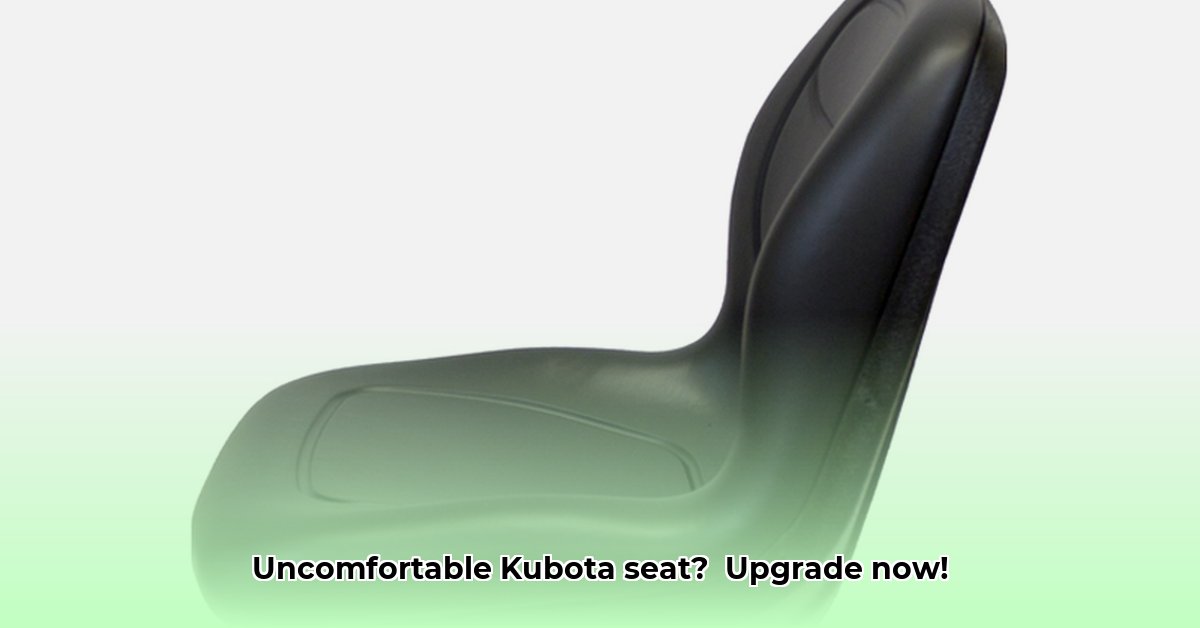
Spending long hours on a tractor demands a comfortable and supportive seat. A worn-out or ill-fitting seat compromises operator comfort and, critically, safety. This guide provides a comprehensive walkthrough of replacing your Kubota tractor seat, from selecting the right replacement to its safe installation and ongoing maintenance. For more resources, check out this helpful tractor seat guide.
Finding the Right Seat: Identifying Your Kubota Model and Part Number
Before ordering a replacement, precise identification of your Kubota model and the correct seat part number is paramount. Incorrect parts lead to wasted time and money.
Begin by locating your tractor's model and serial number. These are usually found on a sticker under the hood, on a side panel, or in your owner's manual. Carefully record these numbers.
Next, use these identifiers to find the correct seat part number. Kubota's official parts catalog (accessible online) is the most reliable resource. Alternatively, contact your local Kubota dealership for assistance. Cross-referencing part numbers from multiple sources is advisable to ensure accuracy. This meticulous approach prevents costly mistakes.
OEM vs. Aftermarket Seats: A Detailed Comparison
The choice between an Original Equipment Manufacturer (OEM) seat and an aftermarket option significantly impacts cost, quality, and warranty coverage.
OEM Kubota seats guarantee a perfect fit and come with manufacturer warranties, ensuring reliability and peace of mind. However, they command a higher price, typically ranging from $900 to $1100.
Aftermarket seats offer a more budget-friendly alternative, often costing between $100 and $300. However, quality and fit can vary widely. While some aftermarket seats provide excellent value, others may lack durability or require modifications for proper installation. Thorough research is crucial before purchasing an aftermarket seat. Improper fit can compromise safety and comfort.
| Feature | OEM Kubota Tractor Seat | Aftermarket Kubota Tractor Seat |
|---|---|---|
| Cost | Higher ($900-$1100) | Lower ($100-$300) |
| Fit | Guaranteed perfect fit | May require modification; compatibility issues may arise |
| Warranty | Typically covered by Kubota's warranty | Varies greatly; may not be covered |
| Quality | Consistently high, using premium materials | Variable; extensive research is crucial to ensure quality; some may lack durability |
| Availability | Readily available from Kubota dealers and online retailers | Availability varies depending on supplier and model; may have longer lead times |
Choosing between OEM and aftermarket depends on budget constraints and the level of risk one is willing to accept.
Choosing the Right Seat Features: Prioritize Comfort and Functionality
Selecting a new seat involves considering crucial features impacting both comfort and operational efficacy.
Suspension: Air suspension delivers superior comfort, absorbing bumps effectively. Mechanical suspension offers a more robust and reliable, albeit less luxurious, alternative. The choice depends on terrain and operator preferences.
Backrest Height: Higher backrests enhance lumbar support for extended periods, but can feel restrictive for some users. Selecting the appropriate height depends on individual body size and preference.
Armrests: Armrests reduce fatigue, especially during prolonged use, but add to overall seat size. Consider how often you use armrests when making your decision.
Adjustability: Adjustable height, tilt, and lumbar support personalize the seat, optimizing comfort and reducing strain. This adaptability ensures superior comfort regardless of operator posture.
Careful consideration of these features ensures optimal comfort and operational performance.
Installing Your New Kubota Tractor Seat: A Step-by-Step Guide
Installing a new tractor seat requires careful precision and attention to safety. Always prioritize safety -- consult your tractor's manual and the seat's installation instructions.
Step 1: Preparation: Gather the necessary tools, safety glasses, and thoroughly review the instructions. This ensures a smooth and efficient installation process.
Step 2: Removing the Old Seat: Disconnect electrical connections (if any), then carefully remove the mounting bolts securing the seat. Avoid forceful removal.
Step 3: Installing the New Seat: Align the new seat with the mounting brackets and secure with the correct hardware. Ensure the seat is firmly attached and properly aligned.
Step 4: Reconnecting: Reconnect any electrical components and verify their functionality.
Step 5: Testing: Test all seat adjustments and ensure sturdy attachment before operating the tractor. Incorrect installation poses a significant safety risk.
Professional installation is advisable if the DIY approach feels overwhelming or outside your comfort zone.
Maintaining Your New Seat: Prolonging its Lifespan
Regular maintenance extends the life and comfort of your new tractor seat.
Cleaning: Regular cleaning with appropriate cleaners (following the manufacturer's instructions) removes dirt and debris.
Inspection: Periodically inspect the seat for wear and tear, addressing minor issues promptly.
Lubrication: Lubricate moving parts to maintain smooth operation and prevent squeaking.
Adjustment: Regularly adjust the seat to maintain optimal comfort and support.
Proactive maintenance ensures continued comfort and safety for years to come. Investing time in maintenance maximizes the lifespan of your investment.